

RESTING, STILL RACING
Anxiety & Overthinking Therapy in Burr Ridge, IL
From the outside, you’ve got it handled. Whether you’re in grad school, early in your career, or figuring out what comes next, your mind is busy replaying conversations, bracing for what could go wrong, and planning for every possible outcome.
It never really shuts off.
Therapy gives you a place to be the person, not the provider, and figure out what you actually need.
Anxiety doesn’t come with a do-not-disturb setting.
For many people in their twenties and early thirties, it doesn’t look like falling apart. It looks like a full calendar and a mind that never gets a day off. It might be a constant hum of worry, social anxiety, panic attacks, perfectionism that never lets up, or imposter syndrome that follows you into every new role. Most of the time it’s a mix, and it’s usually trying to protect you from failing, being judged, or letting someone down.
Anxiety therapy is about understanding which worries keep showing up, why they started, and what keeps them going. From there, we work on responding to them differently, so worry stops making your decisions for you and you can make room for the life you’re actually trying to build.
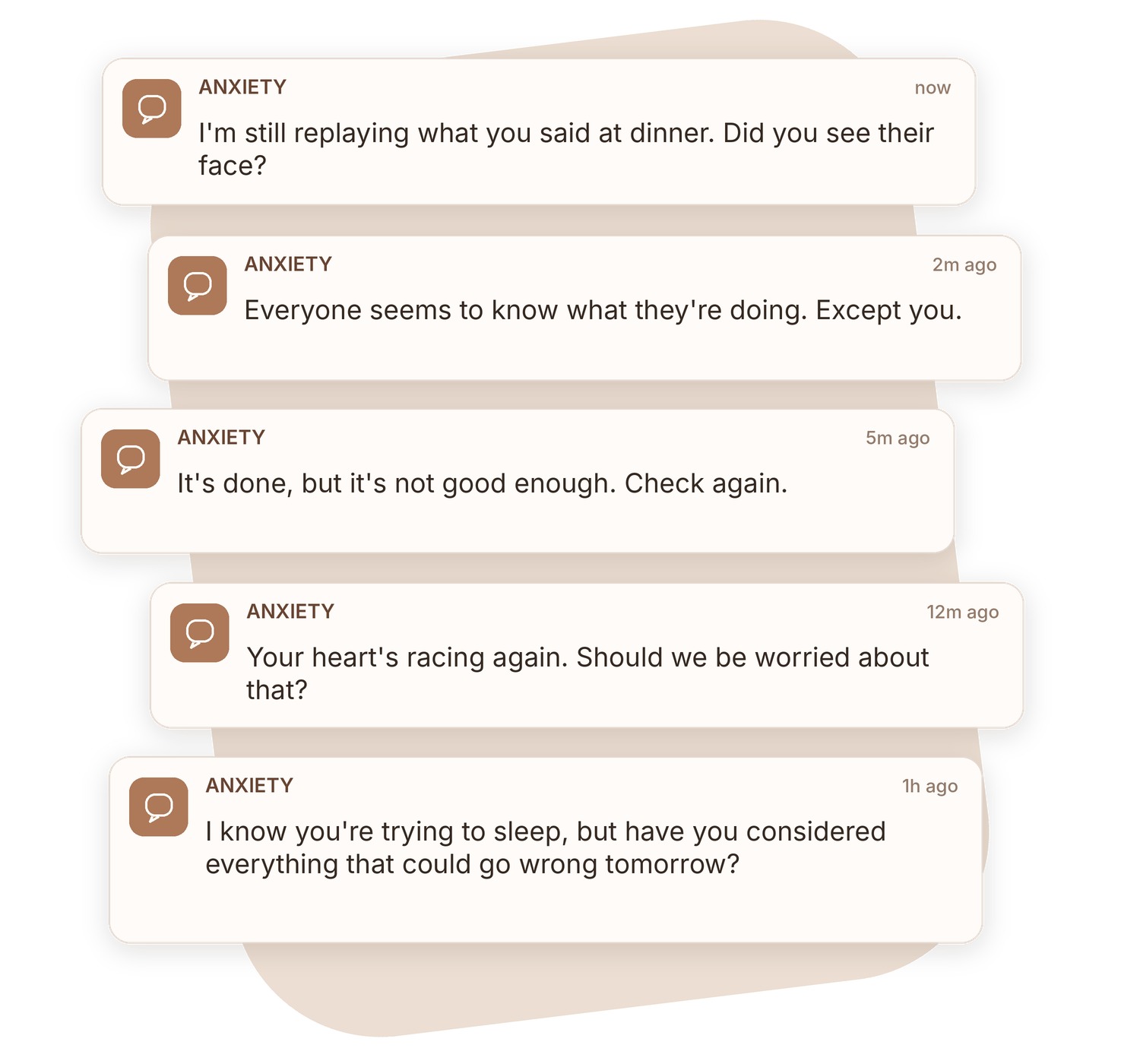
When Worry Keeps Pinging

HOW I WORK WITH ANXIETY
Hi, I’m Brittany
ANXIETY THERAPIST IN BURR RIDGE, IL
For most people I work with, anxiety doesn’t look like panic attacks. It looks like overpreparing, overthinking, and staying busy so you don’t have to sit with what’s underneath. It’s the version of you that gets everything done and still lies awake running through tomorrow.
In session, we slow the spiral down. We look at what your anxiety is trying to protect you from, notice what keeps it going, and build tools that work in real life, using evidence-based approaches that fit you.
I often remind clients: don’t be critical, be curious. Overthinkers tend to be their own harshest critics, so part of the work is getting curious about your thoughts instead of believing every one of them. And yes, I’ll kindly call it out when your brain starts catastrophizing.
We’ll set goals that matter to you and check in on what’s changing, so you can see your progress instead of second-guessing it.
WHAT PEOPLE ASK ME
Questions About Anxiety
Anxiety can turn even reaching out into one more thing to overthink. If you’re wondering whether therapy could actually help, start here.
-
Stress usually has a clear source and eases up once that thing passes, like a big exam or a deadline. Anxiety tends to stick around even when nothing is technically wrong, or shows up as constant worry about what could go wrong next. If you’re on edge most days, having trouble sleeping, or your mind won’t let things go, it’s worth talking about, whatever we end up calling it.
-
It rarely looks like the stereotype. For the grad students, young professionals, and healthcare providers I work with, anxiety often hides behind high performance. At work or school, it shows up as perfectionism, overpreparing, and dreading feedback. In relationships, it can look like overanalyzing texts, people-pleasing, or needing reassurance. Socially, it might mean canceling plans because you’re drained, or feeling like you’re performing even with friends. After years in university and medical school counseling centers, I’ve seen how easily this kind of anxiety goes unnoticed, especially when you’re still getting everything done.
-
Not exactly, but they’re close cousins. Overthinking is the habit: replaying conversations, analyzing every option, running the what-ifs on a loop. Anxiety is often the engine underneath it, the feeling that something bad will happen if you stop thinking it through. Therapy helps with both, understanding why your brain grabs onto things and learning how to set them down.
-
Yes. Panic attacks can feel terrifying, especially the first few times, with a racing heart, trouble breathing, or feeling like something is seriously wrong. Together, we work on understanding what’s happening in your body, practicing tools to ride one out, and easing the fear of the next one, which is often what keeps the cycle going. If you haven’t already, it’s also worth checking in with your doctor to rule out any medical causes.
-
Not necessarily. Many people feel real relief from therapy alone. As a counselor, I don’t prescribe medication, but if you’re curious about it or already taking something, we can talk it through, and with your permission, I’m happy to coordinate with your doctor or psychiatrist. It’s your call, and there’s no wrong answer.
-
Honestly? This is one of the most common worries I hear. A lot of people believe their anxiety is what keeps them successful, and they’re scared that without it, they’ll lose their edge. But anxiety isn’t the reason you’re good at what you do. You are. Therapy helps you keep the drive and lose the dread, so you can work hard without running on fear.

A MIND THAT CAN REST
What Calm Can Look Like
Quiet Nights
You fall asleep at night without replaying today or rehearsing tomorrow.
Easy Choices
You make a decision and move on, without circling back to it ten times.
Fewer What-Ifs
You catch the worst-case scenario before it takes over your whole day.
Speaking Up
You say what you think without rewriting it in your head five times first.
Real Downtime
You enjoy a free afternoon without feeling like you should be doing something.
Kind Self-Talk
You talk to yourself the way you’d talk to a friend who’s struggling.
MORE WAYS I CAN HELP
Anxiety Rarely Travels Alone
Anxiety often shows up alongside other challenges, like past experiences, work stress, relationship strain, or questions about identity and direction.


THE THERAPY CHECKLIST
No Crisis Necessary
People ask me what they need to be experiencing before starting therapy, and my answer is always the same: there isn't a checklist. You don't have to be having panic attacks, losing sleep every night, or waiting for your anxiety to completely take over your life.
Maybe you're still showing up to work, keeping plans, and getting things done. But you're also second-guessing yourself, anticipating the worst, or spending way too much time in your own head. Being able to function doesn't mean your anxiety isn't taking a toll.
There's no magic threshold where anxiety suddenly becomes “bad enough” to deserve attention. You don't have to compare your struggles to someone else's or convince me that what you're experiencing is serious enough. If your anxiety is affecting how you feel or live your life, that's worth talking about.
You can start therapy because you want to understand your anxiety, change how you respond to it, or simply get ahead of it before things get worse. And if you're not entirely sure where to start, that's okay. We can figure that part out together.

Your Brain Has 40 Tabs Open
Let’s Close a Few
Whether it’s school, work, relationships, or the thoughts that follow you to bed, therapy can give you a space to slow down, figure out which tabs actually matter, and finally breathe.
You don’t need to think this through first.
For once, you can just start with one conversation.
Reach out for a free consultation and I’ll get back to you within 24 hours.